
Threads Video Downloader – Save Threads Photos & Videos HD
Threads Media Saver – Download Images & Videos from Threads 📱 Threads Media Saver ⚡ Free • No Registration • High Quality Download images, photos & videos from any public Threads post. Fast, private & reliable. 🧰 Threads Downloader Image & Video Paste a Threads post URL below — extract all media with one click 🔗 Threads post link ✨ Extract Media 💡 Supports threads.com & threads.net — works with single image, carousel & video posts. ❓ Everything you need to know 📌 How does it work? This tool uses your WordPress backend to fetch the public Threads post, extracts direct image/video URLs, and presents them for download. No API keys required — just paste the link. 🖼️ Can I download carousel posts? Absolutely! The tool detects all images and videos inside a carousel. Each media item appears as a separate card ready to save. 🎬 Video quality & format Videos are saved in original MP4 format (HD if available). Just click download and the file will be saved directly to your device. 🔒 Private accounts? Only public posts are supported due to Threads platform restrictions. This respects user privacy and content ownership. 📱 Mobile / iPhone Fully responsive — works on iOS, Android, and desktop. On iPhone tap “Download” then “Save Video/Image” to camera roll. ⚙️ Not working? Make sure the post is public and contains media. If error persists, try refreshing or contact support. Your backend must have the REST endpoint active. ⚡ Tool communicates with WordPress backend via REST API — ensures CORS-free fetching. Respect copyright: only download content you have permission to use.
How Much Does a Website Cost in Dubai in 2026?
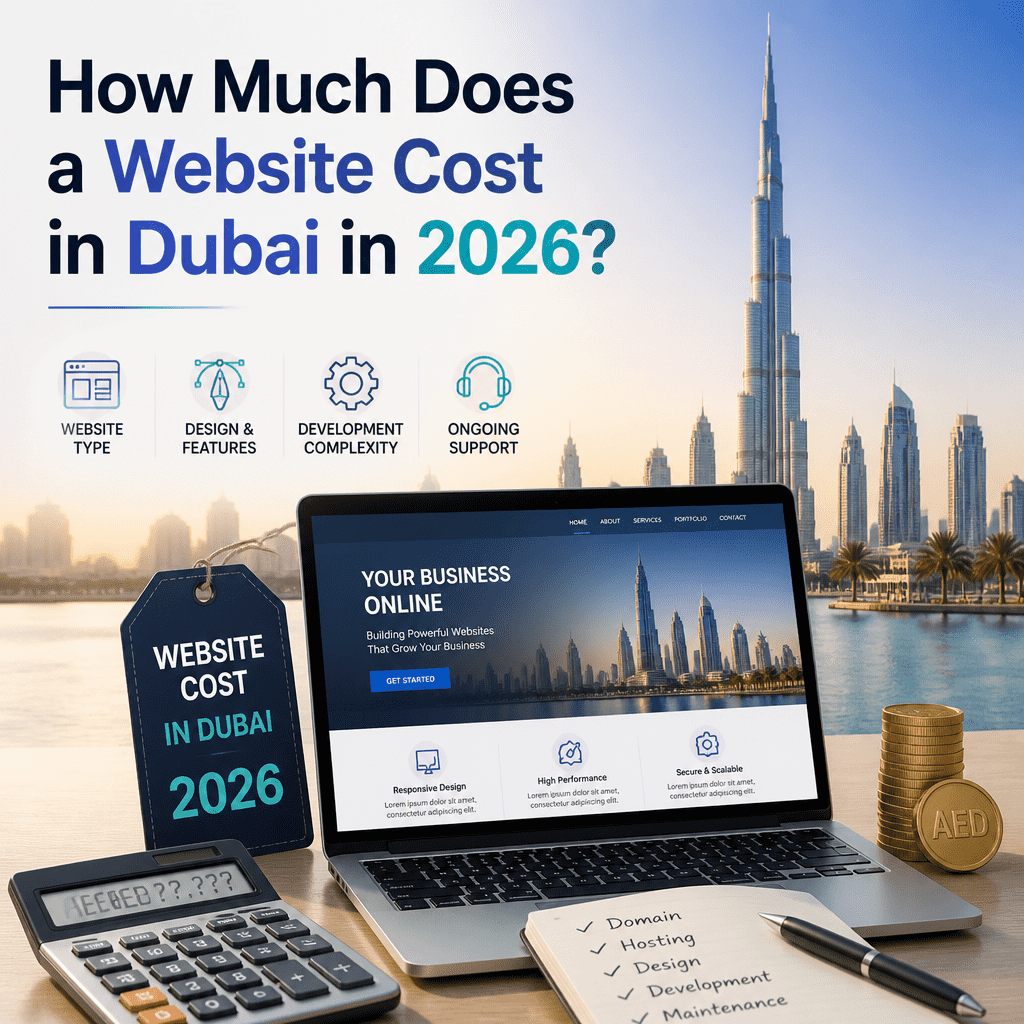
The honest, AED-by-AED breakdown every UAE business owner needs before spending a single dirham. If you’ve ever Googled “website cost Dubai” and landed on a page that says “it depends” — you already know how frustrating that answer is. You’re not looking for philosophy. You need numbers. So here they are. In this guide, I’ll break down exactly what a website costs in Dubai in 2026, from a simple freelancer-built business card site to a full e-commerce platform. I’ll tell you what drives the price up, what you can safely cut, and what the cheapest option usually ends up costing you in the long run. The short answer: website costs in Dubai Website type Price range (AED) Best for Basic business website (5 pages) AED 1,500 – 4,000 Freelancers, consultants, small shops Professional WordPress site AED 4,000 – 12,000 SMEs, service businesses, startups E-commerce store (Shopify / WooCommerce) AED 8,000 – 25,000 Online retail, product-based businesses Custom web application AED 25,000 – 100,000+ SaaS, portals, booking platforms Website redesign AED 3,000 – 15,000 Existing businesses refreshing their online presence Now let’s go deeper. Tier 1: Basic business website — AED 1,500 to AED 4,000 This is your digital business card. It typically includes a homepage, an about page, a services page, a contact form, and maybe a blog. It’s built on a template — usually WordPress with a free or low-cost theme — and it does the job of telling people you exist. What you get: What you don’t get: Who builds these in Dubai: Freelancers on platforms like Fiverr, local web design students, and offshore agencies. The catch: At this price point, you’re often paying for someone to install a theme, add your logo, and hand you the keys. That’s fine if you have realistic expectations. But many business owners in Dubai spend AED 2,000 on this, get underwhelmed by the result, and then spend AED 8,000 properly six months later. Doing it right the first time saves money overall. Tier 2: Professional WordPress website — AED 4,000 to AED 12,000 This is the sweet spot for most small and medium businesses in Dubai. A professional WordPress site built by an experienced developer uses a premium theme or page builder (like Elementor), has proper on-page SEO from day one, loads quickly, and is designed to convert visitors into enquiries. What you get: What moves the price within this range: Who needs this: Restaurants, law firms, medical clinics, real estate agencies, digital marketing freelancers, and consultants in Dubai who want to rank on Google and look credible to potential clients. At this budget, a good developer will also set up your Google Business Profile, submit your sitemap to Google Search Console, and ensure your site has the technical foundations to rank. That’s the difference between a website that generates leads and one that just sits there. Tier 3: E-commerce website — AED 8,000 to AED 25,000 If you’re selling products online in the UAE, you need more than a pretty homepage. You need product pages, a shopping cart, a secure payment gateway, inventory management, and a checkout experience that works on mobile — because over 78% of UAE shoppers browse and buy on their phones. Platform options in 2026: Shopify — AED 8,000 to AED 18,000 to set up professionally WooCommerce (WordPress) — AED 10,000 to AED 25,000 to set up professionally What drives the cost up on e-commerce projects: Tier 4: Custom web applications — AED 25,000 and above Booking platforms, property listing portals, SaaS dashboards, CRM systems, or any site with complex user login, dynamic data, or custom workflows falls into this category. These projects require a development team — not just a designer — and timelines typically run 2–6 months. Prices at this level depend heavily on the scope, so a detailed specification document (sometimes called a tech brief or scope of work) is essential before any quotes are given. If someone quotes you AED 8,000 for a project of this complexity, walk away. What actually affects the price? Understanding what drives cost helps you make smarter decisions and avoid being overcharged. 1. Who you hire A student or offshore freelancer will charge the least but carry the highest risk. A mid-level Dubai-based freelancer with a portfolio typically charges AED 4,000–15,000. An established local agency with a team can charge AED 15,000–60,000+. The right choice depends on your budget, timeline, and how mission-critical the site is. 2. Design complexity Using a premium template with your branding costs far less than designing every element from scratch. For most businesses, a well-customised template at AED 6,000 outperforms a fully custom design at AED 20,000 in terms of ROI. 3. Content Many developers charge separately — or simply don’t include — copywriting, professional photography, or Arabic translation. Budget separately for this. Good copy alone can double your conversion rate. 4. SEO from day one A website built with SEO in mind from the start costs 10–20% more upfront but saves you thousands in fixes later. Google cares deeply about page speed, mobile-friendliness, structured data, and proper URL structures. Getting these wrong at the build stage means paying to fix them later. 5. Ongoing maintenance This is the cost most people forget. WordPress sites need plugin updates, security patches, backups, and occasional fixes. Budget AED 200–800/month for a basic maintenance retainer, or AED 1,500–4,000/month if you want regular content updates and SEO monitoring included. The real cost of going too cheap Dubai is a competitive market. Your website is often the first thing a potential client sees before they decide to pick up the phone or fill in your form. A slow, generic-looking website in a city full of well-funded competitors quietly kills your credibility. The most common pattern I see: a business owner spends AED 2,000 on a cheap website, it doesn’t generate any enquiries, they assume “websites don’t work”, and they miss 12 months of potential leads. Then they rebuild it properly for AED 8,000 — which they
Instagram Reels & Post Downloader – Download Any Instagram Video in HD
Are you tired of not being able to save your favorite Instagram Reels or posts? Whether you want to keep a funny video, save an inspiring reel, or download a beautiful image for later, our Instagram downloader tool makes it incredibly easy. Just paste the Instagram link and click download – it’s that simple! 📥 Instagram Downloader Paste link – get video/image instantly ✨ Get Download Link Fetching media… Features of Our Instagram Downloader How to Use the Instagram Downloader Tool Instagram Video to Image Downloader Tool Paste your Instagram link below and get your media instantly. Video to Image downloder tool
Best YouTube to MP3 Converter 2026 | Free Online Audio Download Tool

YouTube to MP3 Converter Online – Multiple Formats & Qualities Convert YouTube to MP3/MP4/WAV/M4A | All Audio Formats High-Quality YouTube Audio Downloader | 320kbps MP3 Conversion 🎵 YouTube to MP3/MP4 Converter Convert YouTube videos to audio files instantly. Free, fast, and easy to use! Supports: youtube.com, youtu.be, YouTube Shorts Choose Format: 🎧 MP3 Audio Best for music 🎬 MP4 Audio Universal format 📱 M4A Apple devices 🎚️ WAV Lossless quality Quality Settings: 64 kbps (Smallest size)128 kbps (Good quality)192 kbps (High quality)320 kbps (Best quality) 🚀 Convert Now Processing… I agree to use this tool for personal content only ✅ Conversion Ready! 🎉 Video Title Channel Name • 0:00 Format: MP3 Size: — MB Quality: 128 kbps 💾 Download Audio 💡 Tip: Right-click → “Save link as…” to download 🔄 Convert Another Video ⚠️ Important Notice: This tool is for personal use only. Please respect copyright laws and only convert content that you own or have permission to use. Do not download copyrighted material without authorization. ✨ Features: ✅ No software installation required ✅ Works directly in your browser ✅ Fast conversion speed ✅ High-quality audio output ✅ Supports multiple formats 📋 Limitations: ⏱️ Max video length: 2 hours 📁 Max file size: 500MB 🔒 Private/age-restricted videos not supported Best YouTube Video to Audio Converter for Windows 10/11
Instagram Story Video to Image Downloader
I’ll create a clean, user-friendly interface for downloading images from Instagram story videos. This will include a video player, frame extraction, and download functionality. Instagram Story Video to Image Downloader Instagram Story Video to Image Downloader Extract and download frames from your Instagram story videos 📁 Upload Your Instagram Story Video Select a video file or drag and drop it here Select Video Video Preview Capture Frame Reset Captured Frame Download Image How to Use: Upload your Instagram story video using the button above Play the video and pause at the frame you want to capture Click the “Capture Frame” button to extract the current frame Preview the captured image and click “Download Image” to save it Instagram Reels Downloader Download your favorite Instagram reels quickly and easily. Download Instagram Reels Note: This tool works entirely in your browser. Your videos are not uploaded to any server – we respect your privacy! Instagram Story Video to Image Downloader © 2023 Tool – Instagram reels downloader
A Year in Review: How Our SEO Efforts Are Paying Off for Synclovis
Over the past 12 months, we’ve been working diligently behind the scenes to improve Synclovis’s visibility on Google Search. From keyword rewamping to fixing technical SEO issues, every action was focused on one goal—long-term organic growth. The latest Google Search Console performance metrics are a testament to how consistent effort and the right strategies can drive real results. Keyword Rewamp & On-Page Optimization When we began our SEO journey, one of the first initiatives was a complete keyword revamp. We shifted our focus to intent-based keywords that align better with what our target audience is actually searching for. This wasn’t just about plugging in high-volume search terms—it was about making sure each page answers the questions and needs of potential clients. Simultaneously, we worked on strengthening on-page SEO elements like: Technical SEO Fixes No SEO strategy is complete without a solid technical foundation. Here’s what we addressed: These changes helped Google bots crawl and index our site more effectively, directly contributing to the boost in impressions and clicks. Results After 12 Months According to Google Search Console data (screenshot above): These numbers represent more than just traffic—they reflect greater brand discoverability, better alignment with user intent, and improved SERP (Search Engine Results Page) presence. One of the most encouraging signs is the steady upward trend in impressions and clicks, especially in the last few months. This is the long-term payoff we expected from an organic strategy focused on quality over shortcuts. What We’re Doing Now: Enhancing User Experience Now that we’ve built a solid SEO foundation, we’re moving to the next phase: user experience optimization. We’re analyzing how visitors interact with our site—how long they stay, which pages they explore, and where they drop off. The goal is to make every visit seamless, engaging, and action-driven. This includes: Conclusion SEO is not a one-time task; it’s an ongoing process. The progress made over the past year for Synclovis.com is proof that strategic planning, technical precision, and content alignment can deliver measurable outcomes. And we’re only just getting started. Stay tuned as we continue refining the experience and optimizing for what truly matters user intent and satisfaction.
How AI Models Are Impacting Organic Traffic to Websites
In recent years, artificial intelligence has rapidly reshaped the way users interact with the internet. One of the most significant changes is how AI models especially those powering tools like ChatGPT, Google’s SGE (Search Generative Experience), and Microsoft Copilot are impacting organic traffic to traditional websites. This shift poses new challenges and opportunities for digital marketers, content creators, and SEO professionals. The Changing Search Landscape Traditionally, users relied on search engines like Google or Bing to find answers, leading them to visit websites through organic search listings. However, with the rise of AI-powered assistants and generative search, users can now receive direct answers without ever clicking on a website link. For example: How This Impacts Organic Traffic 1. Reduced Click-Through Rates (CTR) AI-generated summaries or answers mean users are less likely to click on organic results. Even if your website ranks high, if the AI satisfies the user’s intent in the SERP itself, they may never visit your site. 2. Less Visibility for Informational Content Websites offering basic information (definitions, how-tos, summaries) are most at risk. AI tools often pull from multiple sources to provide instant answers—making these pages redundant in many cases. 3. Shift in User Behavior Users are increasingly shifting to chat-based interfaces for queries. This changes how they search and interact with content, favoring concise, conversational formats over long-form blog articles. The Opportunities AI Brings While AI may reduce some types of traffic, it also opens new doors: 1. Higher Demand for Original, In-Depth Content AI models cannot replicate personal experience, first-hand insights, or original research. Websites that offer this kind of content may become more valuable and authoritative. 2. Featured in AI Summaries Well-optimized and credible websites can still be cited or referenced in AI summaries—giving visibility, even if it’s indirect. Brands mentioned frequently by AI tools can build trust and authority. 3. New SEO Strategies AI search engines prioritize user intent, clarity, and semantic relevance over keyword stuffing. Marketers now need to focus more on structured content, schema markup, E-E-A-T (Experience, Expertise, Authoritativeness, and Trustworthiness), and conversational tone. What Can Website Owners Do? To adapt and thrive in the AI era: Conclusion AI models are undoubtedly changing the nature of organic traffic. While there may be a decline in traditional website visits for informational content, there’s also a shift toward smarter, intent-based discovery. Businesses and content creators who evolve their strategies accordingly can continue to grow, even in an AI-dominated landscape.
Meta Ads Campaign Performance Report for VRK Constructions

Over the past month, VRK Constructions launched a two-pronged Meta advertising strategy focused on brand awareness and lead generation. With a total investment of ₹3,000, we strategically divided our budget to meet both visibility and conversion goals. Here’s a breakdown of how our campaigns performed. Campaign Summary Campaign Objective Budget Allocated Amount Spent Key Result Cost Per Result Reach Impressions Brand Awareness ₹500 ₹393.05 182,693 Reach ₹2.15 / Reach 182,693 199,950 Leads Generation ₹2,500 ₹2,149.31 6 Qualified Leads ₹358.22 / Lead 17,018 24,086 Total Investment ₹3,000 ₹2,542.36 Campaign 1: Brand Awareness Insights: This campaign was extremely efficient in driving massive visibility at a minimal cost. With almost 200K impressions and over 180K reach, the brand awareness campaign successfully positioned VRK Constructions in front of a wide audience—setting the stage for future conversion-focused efforts. Campaign 2: Lead Generation Insights: The lead generation campaign was designed to capture high-intent prospects. Though the cost per lead is on the higher end, each lead represents a potentially high-value client in the real estate domain. Further nurturing and follow-up could convert these leads into substantial business opportunities. Key Takeaways Final Steps
How I Spent ₹40,000 on Google Ads: Campaign Performance, Keyword Insights & Location Analytic
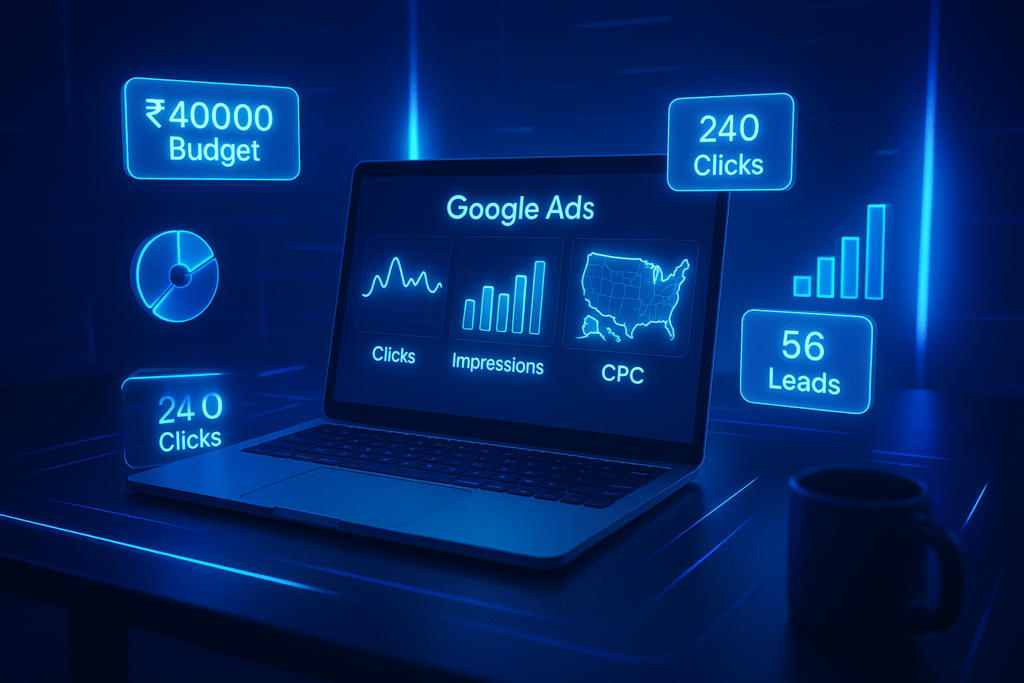
Running a Google Ads campaign is more than just launching ads—it’s about understanding data, optimizing strategies, and generating meaningful leads. Here’s a transparent look into my recent campaign where I invested ₹40,000 across Search and Performance Max campaigns, targeting app development leads in the United States. Campaign Breakdown Budget Used: ₹40,000Campaign Types: Search Campaign Results (May 3 – June 1, 2025) Metric Value Clicks 117 Impressions 1,490 Avg. CPC ₹141 Total Spend ₹16,500 Raw Leads 34 Geographic Targeting The campaign was geo-targeted entirely to the United States, with most interactions coming from California. This aligns perfectly with our intent to reach high-potential startup hubs and tech-savvy regions. Keyword Performance Keyword Cost (₹) Clicks CTR ios and android app development 7,279.32 54 6.89% ios app development 5,588.16 39 10.29% ios game development 1,463.53 9 15.00% build ios app 1,343.11 11 6.01% ios app developers 604.96 3 6.98% 🔍 Observations: Lead Funnel Status (Search Campaign) Stage Count Interactions 117 Raw Leads 34 Qualified Leads 0 Converted Leads 0 Despite a decent raw lead volume, no leads progressed to a qualified or converted stage, which highlights a gap in lead nurturing and follow-up. Key Learnings & Recommendations Performance Max Campaign Report Campaign Duration: May 4 – June 2, 2025Total Budget Spent: ₹17,600 Overall Campaign Metrics Metric Value Clicks 123 Impressions 1,470 Average CPC ₹143 Raw Leads 24 Qualified Leads 0 Converted Leads 0 Lead Funnel Interactions 123 Geographic Performance Location (State) Number of Clicks California 34 Florida 9 New York 9 Texas 7 Pennsylvania 7 Virginia 7 Illinois 6 Arizona 4 Silicon Valley 4 This structured data highlights strong geographic traction in California, followed by key urban states like Florida and New York. While the campaign generated solid click volume, improvements are needed in lead qualification and conversion optimization in future runs. Final Thoughts Spending ₹40,000 on Google Ads gave us valuable data, 56 raw leads across both campaigns, and actionable insights. To improve results: This campaign proved that even if you’re not converting leads yet, the data can point you in the right direction. With tweaks to follow-up and qualification, we expect stronger results in the next cycle.
Sora vs Midjourney: A Deep Dive into the Future of AI-Generated Media
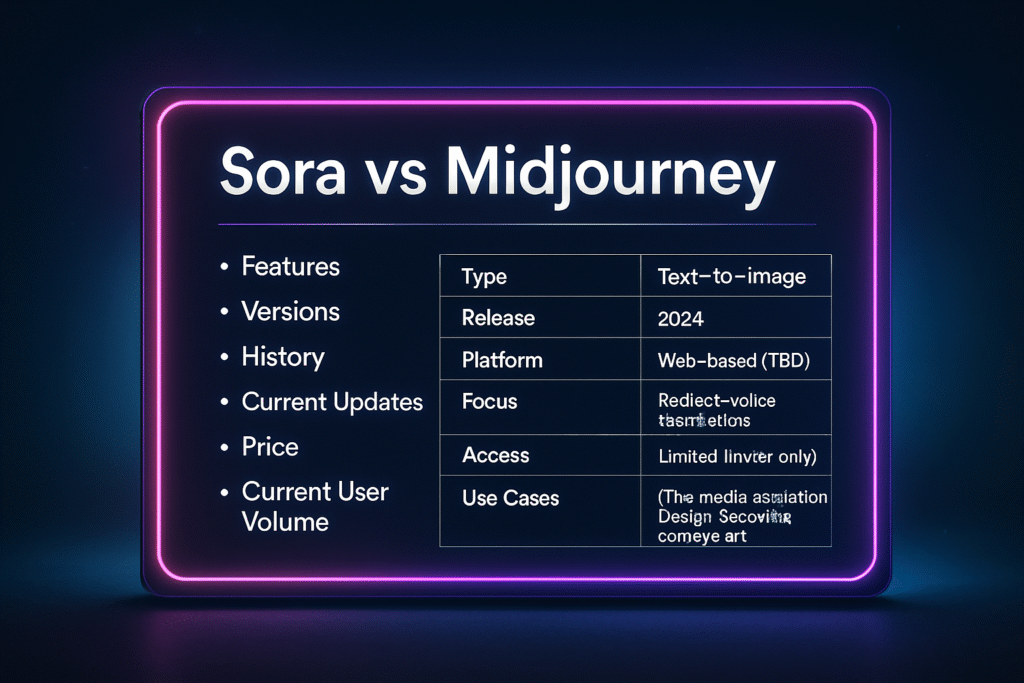
In the evolving world of generative AI, Sora by OpenAI and Midjourney have emerged as trailblazers, pushing the boundaries of creative technology. While both platforms use artificial intelligence to generate visuals, they serve different purposes, have unique strengths, and target diverse user needs. In this blog, we explore the key differences between Sora and Midjourney, looking at their features, history, pricing, current updates, and more. What is Sora? Sora is a powerful AI video generation model developed by OpenAI, capable of creating realistic and imaginative video clips from simple text prompts. It’s designed for professionals in film, gaming, education, marketing, and content creation. Key Features of Sora: What is Midjourney? Midjourney is an AI-powered image generation tool focused on creating artistic and stylized visuals from text prompts. It operates through Discord, offering users a unique community-based interaction. Key Features of Midjourney: History & Evolution 🔹 Sora (OpenAI) 🔹 Midjourney Current Updates (2025) 🔹 Sora 🔹 Midjourney Pricing Comparison Platform Free Plan Starting Price Premium Plans Sora Not available yet Not announced TBD (expected to follow OpenAI pricing model) Midjourney No $10/month (Basic) $30 Pro / $60 Mega